

Paulo Cremonez joined Auburn University in July 2024 as an Assistant Professor and Extension Specialist in Vegetable and Fruit Entomology. His work focuses on both immediate and long-term pest management needs for Alabama's vegetable growers, ranging from commercial producers to home gardeners.
His background is rooted in vegetable pest management, with research experience in Integrated Pest Management (IPM), insecticide resistance management (IRM), and the impacts of pesticides on insect mortality, development, and behavior. Since arriving in Alabama, he has expanded his focus beyond vegetables to include small fruit production, aiming to bring practical, science-based solutions to growers across different systems.
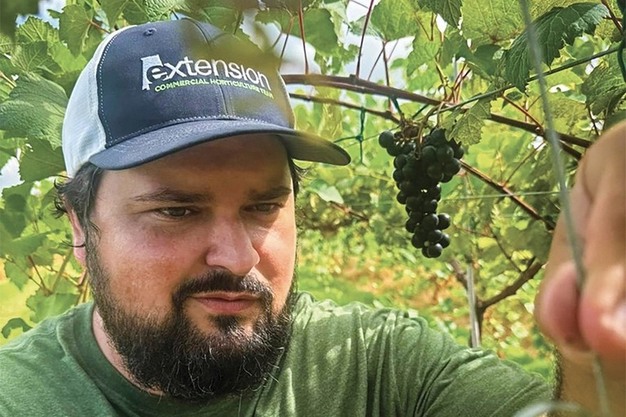
Although new to fruit crop research, he sees opportunities to apply his experience with vegetable systems to fruit pest management. His efforts emphasize insect monitoring, IPM adoption, and applied field trials designed to address the real-world challenges faced by growers. Early work has included collaborations with colleagues to monitor sharpshooter leafhopper activity in grapes and blueberries. These insects—such as the glassy-winged sharpshooter and the broad-headed sharpshooter—are vectors of Xylella fastidiosa, the bacterium responsible for Pierce's disease in grapes, bacterial leaf scorch in blueberries, and phony peach disease in peaches. These diseases can cause severe yield losses and long-term plant decline. While not yet widespread in Alabama, the presence of sharpshooter vectors highlights the need for proactive research. By gathering early-season and peak-activity data, Paulo and his team aim to generate baseline information that will inform future disease prevention and management strategies.
 © University of Auburn
Another priority for Paulo is developing a proactive monitoring network for the spotted lanternfly (Lycorma delicatula), an invasive pest that threatens fruit production across the eastern United States. Although not detected in Alabama as of spring 2025, the pest has been reported in neighboring Georgia and Tennessee, with the southernmost detection in metro Atlanta. This proximity raises concerns for potential spread into Alabama, especially in the Tennessee Valley and I-59 corridor, where traffic and host plant availability increase the risk of introduction. Vineyards and muscadine production could be particularly vulnerable. He emphasizes the importance of engaging Extension agents, growers, and community members in coordinated monitoring efforts to ensure early detection and rapid response.
While his expertise lies primarily in vegetable systems, he is building an applied research and Extension program that also supports Alabama's fruit growers. His long-term goals include incorporating advanced technologies, such as precision agriculture tools, to strengthen pest management in specialty crops. Through research, outreach, and collaboration with growers, industry partners, and Extension professionals, he aims to provide practical, research-driven strategies that protect crops and sustain production in the state.
Source: University of Georgia