

Today marked the third and last day of Asia Fruit Logistica in Hong Kong. After two years of adverse weather, the organization must be relieved this year's edition went by without rainstorms or typhoons. It was just hot and humid in the city. On this last day of the show, it was less busy, which gave exhibitors an opportunity to look around and visit the stands of other companies. Overall, the feeling is that this year's event was attended by fewer people compared to previous editions. Nevertheless, exhibitors were positive about the quality of attendees and the meetings they had.
Untraditional fruits
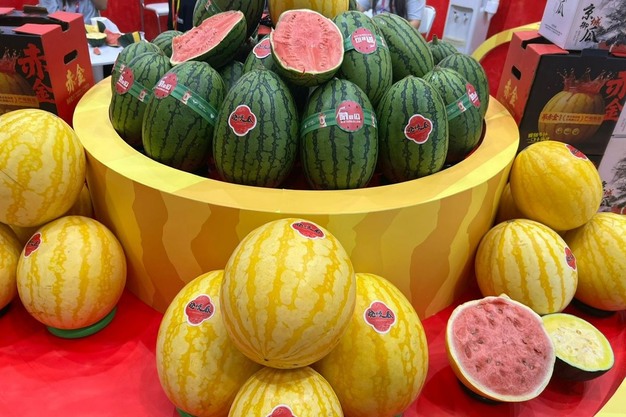
China had the largest presence at the event with a domestic produce industry that's developing in rapid pace. What also stood out from Chinese exhibitors are the new and visually appealing fruit varieties they offer in addition to traditional fruits. Some examples include yellow-skinned watermelons and strawberry apples. These fruits attracted lots of attention from overseas visitors.
 © Ning Fan | HortiDaily.com
Yellow watermelons.
Packaging with traditional Chinese elements
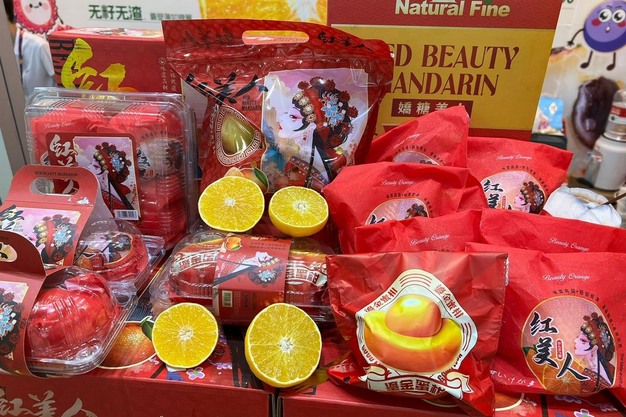
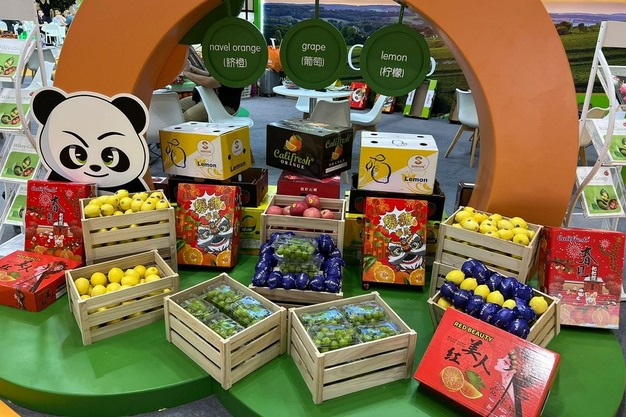
Packaging options are also undergoing a shift. Until a few years ago, premium fruit boxes were very popular, in particular for high-end domestic fruit. However, there seems to be a shift in the market with demand for elaborate gift boxes decreasing and consumers moving towards more practical and minimalistic packaging. Companies are focusing more on product image design to attract consumers, incorporating many traditional Chinese elements into the design. These include characters in ancient costumes. By showcasing the charm of the traditional culture, Chinese exporters hope to attract the attention of overseas consumers.
 © Ning Fan | HortiDaily.com
Chinese art incorporated in product design.
 © Ning Fan | HortiDaily.com
Products with Chinese element packages.
Growing opportunities for North American exports
Exhibitors from North America agree that packaging becomes less important, in particular for produce purchased in bulk. However, retail stores prefer convenience items like pomegranate arils to be pre-packaged. Pomegranate arils are a hot item in Asia currently, mostly with consumers in Korea and Japan. "This is driven by the packaging, which makes consumption of the arils very convenient," said an exhibitor from the U.S. California blueberries are also a popular item in Asia with Taiwan and Japan being some of the largest export markets. The industry hopes to develop the Southeast Asian market as well, targeting countries like Singapore, Malaysia, Thailand, and Indonesia.
 © Nick Peters | HortiDaily.com
Todd Sanders with the California Blueberry Commission.
Expansion potential for Brazil
The recent opening of the Chinese market for Brazilian table grapes and the advanced negotiations for lemons are examples of Brazil's export potential. Brazil is hopeful more markets in Asia will open up for their fruit. In addition to table grapes and lemons, the country also focuses on exports of mangos and melons.
 © Diana Sajami | HortiDaily.com
Team of Abrafrutas Brazil.
For Chile, the Asian market is its primary destination in terms of value and volume and it's also an important destination for bananas from Ecuador. The country recently signed a Strategic Economic Cooperation Agreement with South Korea, representing a significant opportunity to strengthen trade relations between the two countries and potentially expand access to one of the most dynamic markets in Asia. Out of Mexico, avocados are already being shipped to the Asian market, primarily to Japan and China. However, Mexico is seeking expansion into China and is working to meet the required standards.
 © Diana Sajami | HortiDaily.com
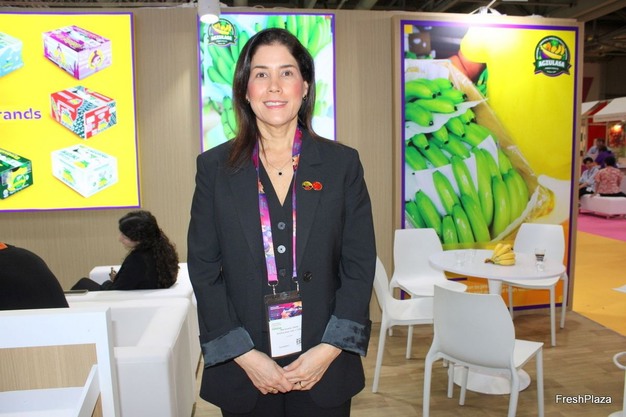
Marianela Ubilla with Agzulasa from Ecuador.
Apples are key export product for Italy
With about 20 exhibitors, Italy was one of the larger exhibiting countries from Europe, mainly representing machinery. For Italy, Hong Kong is an important gate to the Asian market, especially to China. The international city has many connections to Europe and there is no language barrier, which simplifies doing business. Apples are one of the main produce items exported from Italy to Asia. One Italian exhibitor unveiled a new apple variety. With their storage facilities being in the heart of the Dolomite mountains, the fruit travels from the processing facility to storage by cable car.
 © Youness Bensaid | HortiDaily.com
Apples from Italy.
FreshPlaza's photo report with photos of exhibitors will be published on Monday.