
In recent months, supermarket chain Lidl has been making headlines in the Netherlands. First, they introduced organic strawberries to their shelves, and not long after, they launched a pilot project for more sustainable cultivation of strawberries, apples, and potatoes. The project was first announced by Quirine de Weerd at GreenTech Amsterdam, where she shared the stage with Elise Wieringa, Sustainability Manager at Intratuin, during the Day of the Dutch Grower.
On stage, the discussion centered on both the challenges and the opportunities involved in making horticulture more sustainable. Speaking on behalf of Intratuin, Elise addressed the need for a shift in how consumers view insects in their produce. At the moment, there's still a "zero tolerance" expectation — meaning no bugs allowed — but she argued that this mindset has to change if we want to move toward more sustainable crop protection.
Lidl is also taking steps in that direction, focusing on potatoes, vegetables, and fruit. Together with Natuur & Milieu (Nature & Environment Foundation), research agency CLM, growers, and the Dutch Ministry of Agriculture, the supermarket is running a pilot aimed at reducing the use of chemical crop protection products.
The goal is to learn more about what sustainable cultivation means for the appearance of fresh produce. After all, shoppers don't just look at price, they also look at looks. Most people instinctively reach for the apple or strawberry without a blemish, or the lettuce without a single aphid. And that's becoming more relevant than ever, especially in open-field lettuce production, where chemical control options are disappearing faster than alternatives are arriving.
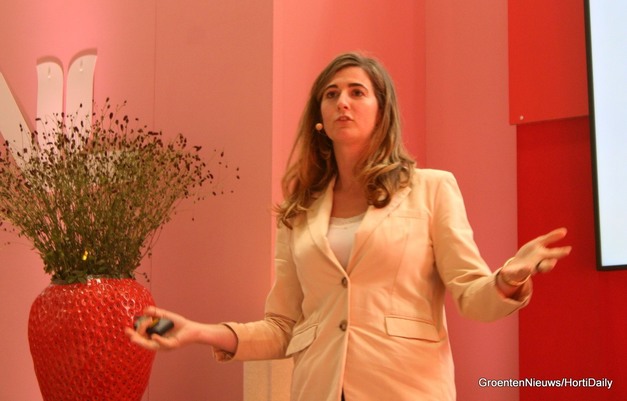 © Thijmen Tiersma | HortiDaily.comQuirine de Weerd for Lidl on stage at GreenTech Amsterdam 2025
Choosing sustainably for the customer
"We need to make the sustainable choice for our customers," said Quirine in Amsterdam, "because customers ultimately vote with their wallets." For several years now, Lidl has been actively promoting the Planetary Health Diet, an eating pattern designed to be both healthy for people and the planet. The supermarket believes this should also be affordable for those with a tighter budget.
Fresh produce is a core category for Lidl. "If you do well in fruit and vegetables, customers trust the rest of your assortment too." That's why the retailer proudly highlights its fruit and veg credentials, from offering competitive pricing in the produce aisle to showcasing its repeated wins of the national award for Best in Fruit and Vegetables.
But Lidl's focus doesn't stop there. The company is also working to make wholegrain products more affordable. "We need to turn wholegrain into a more attractive option," Quirine explained. For shoppers, that means prices have to be tempting. "Yes, it hurts our margins as Lidl, but it hurts our competitors' margins even more," she added with a smile. Later this year, Lidl will roll out a major campaign focused on boosting fiber consumption.
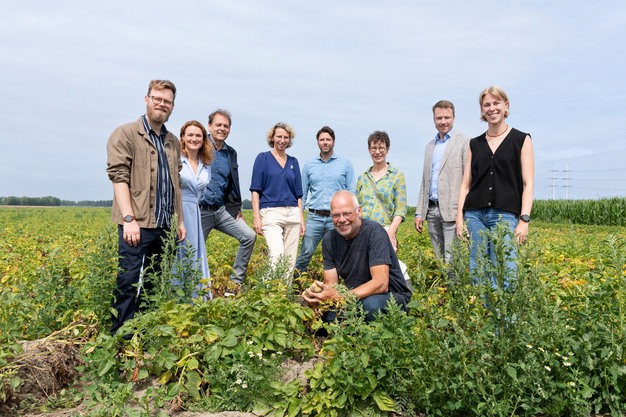 © Lidl Nederland From left to right: Rutger Westerhof, Natuur & Milieu. Esmée van Veen, Lidl. Peter Leendertse, CLM. Berthe Brouwer, Natuur & Milieu. Maurits Wösten, Lidl. Ellen Klein, CLM. Joost Renirie, Lidl. Imre ter Hedde, Lidl. Jan Ham, potato grower Gebr. Ham at the announcement of the sustainable cultivation pilot for strawberries, apples, and potatoes.
Organic
By 2026, Lidl wants to double its sales of organic fruit and vegetables compared to 2022. That means raising the share of organic produce from 4 percent to 8 percent. One step in that direction was the recent launch of organic strawberries in their stores. The goal is to make organic strawberries accessible to a much wider audience. "We need to move away from the elitist image of organic," said Quirine. She believes that by boosting demand, organic cultivation itself can grow. And Lidl isn't planning to wait for demand to appear on its own. "I'm done with saying 'the customer isn't asking for organic, so we won't offer it,'" she added.
From the audience came the question: does an organic grower have to be large-scale to supply Lidl? The answer from the head of corporate affairs was no. Fruit and vegetable production is already largely local, and unlike ornamental horticulture, where her fellow speaker from Intratuin is active, the sector is further along in scaling up. Intratuin sees more of a challenge in bringing organic ornamental products into stores. According to Elise, many organic ornamental growers are still relatively small and fragmented. Pooling production capacity could help them make the leap.
Both Quirine, speaking for Lidl, and Elise, speaking for Intratuin, used the stage in Amsterdam to call for more sharing of knowledge, not just about what technology can already do in the shift toward more sustainable cultivation, but also about the limits and possibilities of growing with little or no chemical crop protection.
Lidl's pilot project will run for two years, with results analysed after each growing season. In November 2025, Lidl will host a nationwide knowledge-sharing session, bringing together growers, policymakers, NGOs, and research institutions to exchange lessons learned.